TOBIAS POST
30 YEARS OF PRODUCT DEVELOPMENT ENTREPRENEURIAL EXPERIENCE AS LEVERAGE
Product developer · Software architect · Entrepreneur · Professional artist
TOBIAS POST
30 YEARS OF PRODUCT DEVELOPMENT ENTREPRENEURIAL EXPERIENCE AS LEVERAGE
Product developer · Software architect · Entrepreneur · Professional artist
For more than three decades I have been developing software products, technical systems and digital tools.
My work brings together software architecture, product development, visual systems and entrepreneurial responsibility.
That involves more than implementing technical requirements. Product development also means structuring unclear tasks, reducing complexity, assessing technical risk, comparing different routes to a solution and choosing a direction that will hold.
This experience matters particularly in development accelerated by AI. When technical variants appear more quickly, the decisions about which of them to pursue become more important.
Unternehmer Avantgarde combines that experience with the speed of today's AI-assisted development.
Product developer · Software architect · Entrepreneur · Professional artist
UNTERNEHMERAVANTGARDE
SOFTWARE DEVELOPMENT
RADICALLY RETHOUGHT
EXPERIENCE × AI CODING
Which competitive advantages are still waiting to be realised?
UNTERNEHMERAVANTGARDE
SOFTWARE DEVELOPMENT
RADICALLY RETHOUGHT
EXPERIENCE × AI CODING
Which competitive advantages are still waiting to be realised?
FOR MANAGEMENT AND PRODUCT DEVELOPMENT
AI coding changes more than how quickly software comes into being. It changes the economics of development, and with it the question of which entrepreneurial ideas can sensibly be examined at all.
Many product ideas were not discarded because their value had been disproved. They were never brought to a solid technical level in the first place, because design, architecture and development would have tied up too much time and capital.
That threshold is shifting.
Which competitive advantages are still waiting to be realised?
THE COST OF EXPERIMENTING IS COLLAPSING
NOT SIMPLY THE SAME THING FASTER
For decades software development was marked by a high barrier to entry. Before a product could be judged in any real sense, requirements had to be structured, technical decisions prepared, interfaces designed, architectures built and considerable development resources committed.
THE COST OF EXPERIMENTING IS COLLAPSING
NOT SIMPLY THE SAME THING FASTER
For decades software development was marked by a high barrier to entry. Before a product could be judged in any real sense, requirements had to be structured, technical decisions prepared, interfaces designed, architectures built and considerable development resources committed.
For decades software development was marked by a high barrier to entry. Before a product could be judged in any real sense, requirements had to be structured, technical decisions prepared, interfaces designed, architectures built and considerable development resources committed.
Those costs acted as a filter. Only a limited share of conceivable product ideas ever reached a stage of development at which a sound judgement became possible.
AI-assisted development changes that filter. It removes neither technical complexity nor the need for good architecture. It can, however, considerably accelerate implementation, the generation of variants, technical research and iteration.
As a result, a coherent functional state of development can be reached far earlier.
The decisive effect therefore does not lie only in delivering existing projects faster. The economic threshold falls at which a new software or product idea can be examined seriously.
THE STRATEGIC SEARCH SPACE GROWS
The relevant change therefore does not lie in productivity alone. It lies in a larger entrepreneurial search space.
THE STRATEGIC SEARCH SPACE GROWS
The relevant change therefore does not lie in productivity alone. It lies in a larger entrepreneurial search space.
The obvious view of AI coding is: existing software projects get faster. That is true, but it describes only part of the change.
Strategically more important is that the set of ideas which can be examined economically grows larger.
A new application no longer has to be described for months as a concept alone. A specialised technical system, a simulation environment, a visual planning system or a new digital product idea can take shape as coherent software far earlier.
This does not merely work through the existing project pipeline faster. Ideas enter development that would previously not have crossed the economic entry threshold of a classic IT project.
The relevant change therefore does not lie in productivity alone. It lies in a larger entrepreneurial search space.
FROM EARLY COMMITMENT TO EARLY INSIGHT
Examine more. Learn earlier. Discard weak approaches sooner. Build out strong ones with more purpose.
FROM EARLY COMMITMENT TO EARLY INSIGHT
Examine more. Learn earlier. Discard weak approaches sooner. Build out strong ones with more purpose.
Classic development models force companies to select early. Only a few ideas receive a budget. Those ideas are then pursued comparatively far, because considerable resources have already been committed.
When the cost of early technical development falls, this order can be partly reversed. More product ideas can first be brought to a real technical level. Only then does one have to decide which approaches justify further investment.
Product development thus shifts from a logic of early commitment to a logic of early insight.
That does not mean producing as many experiments as possible. What matters is reducing uncertainty at the points where it actually affects entrepreneurial decisions.
Examine more. Learn earlier. Discard weak approaches sooner. Build out strong ones with more purpose.
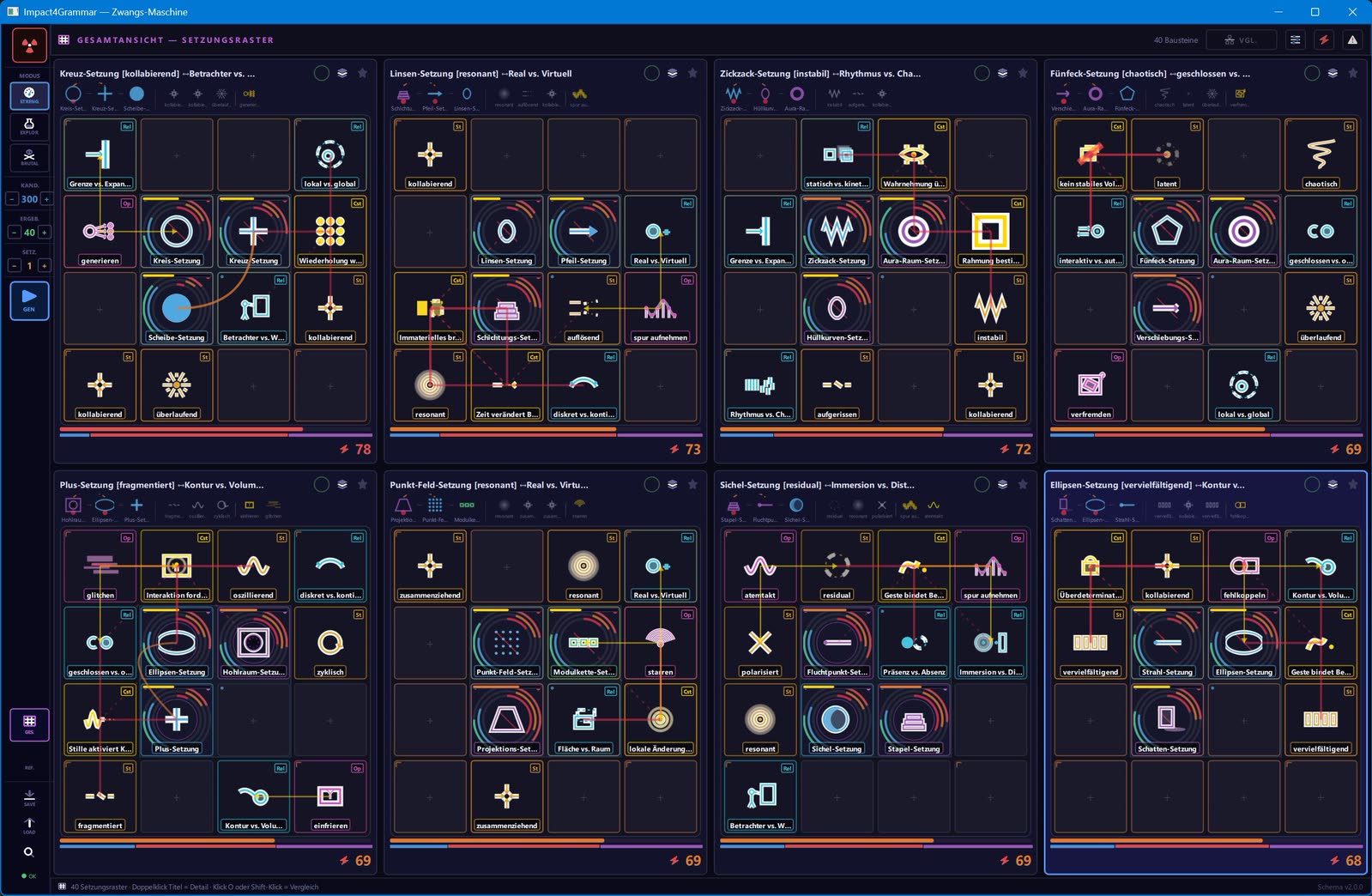
SOFTWARE DEVELOPMENT AS AN INSTRUMENT OF INSIGHT
In an early product phase, a solid state of development can produce more insight than another round of abstract specification.
SOFTWARE DEVELOPMENT AS AN INSTRUMENT OF INSIGHT
In an early product phase, a solid state of development can produce more insight than another round of abstract specification.
Software development is traditionally understood as carrying out a decision that has already been made. First it is defined what is to be built. Then it is developed.
For new products that separation is only of limited use. Part of the decisive insight arises during development itself.
Only a real interface shows whether an idea for operating the system holds. Only real data makes it visible whether a data model is appropriate. Only a working system core shows whether architecture, performance and product logic fit together. Only a usable system permits a realistic assessment of what a product idea can actually become.
Development therefore produces more than software. It produces information about the future product.
In an early product phase, a solid state of development can produce more insight than another round of abstract specification.
WHICH PRODUCT IDEAS CAN BE EXPLORED THIS WAY
FROM IDEA TO A PRODUCT YOU CAN ACTUALLY JUDGE
The relevant unit is therefore not necessarily the single feature. It can be a complete product idea.
WHICH PRODUCT IDEAS CAN BE EXPLORED THIS WAY
FROM IDEA TO A PRODUCT YOU CAN ACTUALLY JUDGE
The relevant unit is therefore not necessarily the single feature. It can be a complete product idea.
- New software products
An entirely new application can be developed far enough for the operating concept, core logic, data structure and technical architecture to be judged together for the first time. What matters is not the simulation of a product in a presentation, but a real state of development against which the product idea can be tested technically and functionally.
- Specialist applications
Specialised desktop or web applications can translate domain knowledge into digital tools in their own right. These may include planning systems, editors, configurators, analysis tools, technical working environments or new industry-specific software products.
- Visual and interactive systems
Where products, machines, data, spaces or complex relationships have to be understood visually, 2D and 3D systems, real-time visualisation and interactive models can themselves become the core of a product. Visualisation is then not decoration, but function.
- Simulation and digital models
Where real trials are expensive, slow or organisationally difficult, simulations and digital models can make variants, states and technical relationships examinable. A working environment in its own right can grow out of this.
- New product families
A product idea need not remain confined to a single application. From a solid technical core, specialised tools, editors, runtime systems and different applications for different tasks can emerge.
The relevant unit is therefore not necessarily the single feature. It can be a complete product idea.
WHAT IS EXPERIMENTAL IS THE OPENNESS OF THE PROCESS, NOT THE TECHNICAL DEPTH.
The aim is as much solid product reality as possible in as short a development time as possible.
WHAT IS EXPERIMENTAL IS THE OPENNESS OF THE PROCESS, NOT THE TECHNICAL DEPTH.
The aim is as much solid product reality as possible in as short a development time as possible.
The experimental character of this approach does not mean that only small or provisional software comes out of it.
What is experimental is the openness of the process of finding out.
Even a technically demanding desktop application can be developed experimentally, if its purpose is first of all to test a product idea in reality and to sharpen its direction further during development.
An early state of development can already consist of several connected elements: a real user interface, domain logic, data storage, visualisation, persistence, import and export functions, communication with external systems, or a solid technical core.
The work therefore goes considerably beyond a visual click-through prototype.
The aim is as much solid product reality as possible in as short a development time as possible.
AN EARLY NO CAN ALSO BE A GOOD OUTCOME.
The value of early development therefore lies not only in creating new products, but also in the quality of the decisions about those products.
AN EARLY NO CAN ALSO BE A GOOD OUTCOME.
The value of early development therefore lies not only in creating new products, but also in the quality of the decisions about those products.
Not every product idea should be developed further.
An early state of development can show that an idea does not hold technically, that its complexity was underestimated, or that the expected benefit does not justify the effort.
It can equally become visible that the originally planned solution is needlessly complicated, that the technical route can be simplified, or that another part of the idea holds considerably more potential.
These outcomes are not a failure of development. They are part of its economic value.
An early, well-founded decision against an idea can be considerably more sensible than a late correction after extensive investment.
The value of early development therefore lies not only in creating new products, but also in the quality of the decisions about those products.
EXPERIENCE × AI CODING
JUDGEMENT SELECTION DIRECTION
When production becomes faster and more economical, the relative value of good decisions rises.
EXPERIENCE × AI CODING
JUDGEMENT SELECTION DIRECTION
When production becomes faster and more economical, the relative value of good decisions rises.
As AI tools become more capable, the relative effort of pure code production falls. With that, the bottleneck moves.
Increasingly, the central question is no longer: how do we produce this code?
It is:
What should be developed at all, in what form and in what order?
Which uncertainty should be reduced first? Which function is essential? Which architecture is appropriate to the current state of development? Where would technical perfection be an unnecessary advance investment? Which dependencies are acceptable? When does a state of development deliver enough insight? When should an experiment become a lasting product? When should development be ended or redirected?
These decisions do not arise automatically from an AI system.
AI can accelerate implementation, generate variants, support technical research and considerably shorten the distance between an idea and a working state of development. Responsibility for selection, architecture, assessment and integration nevertheless remains.
When production becomes faster and more economical, the relative value of good decisions rises.
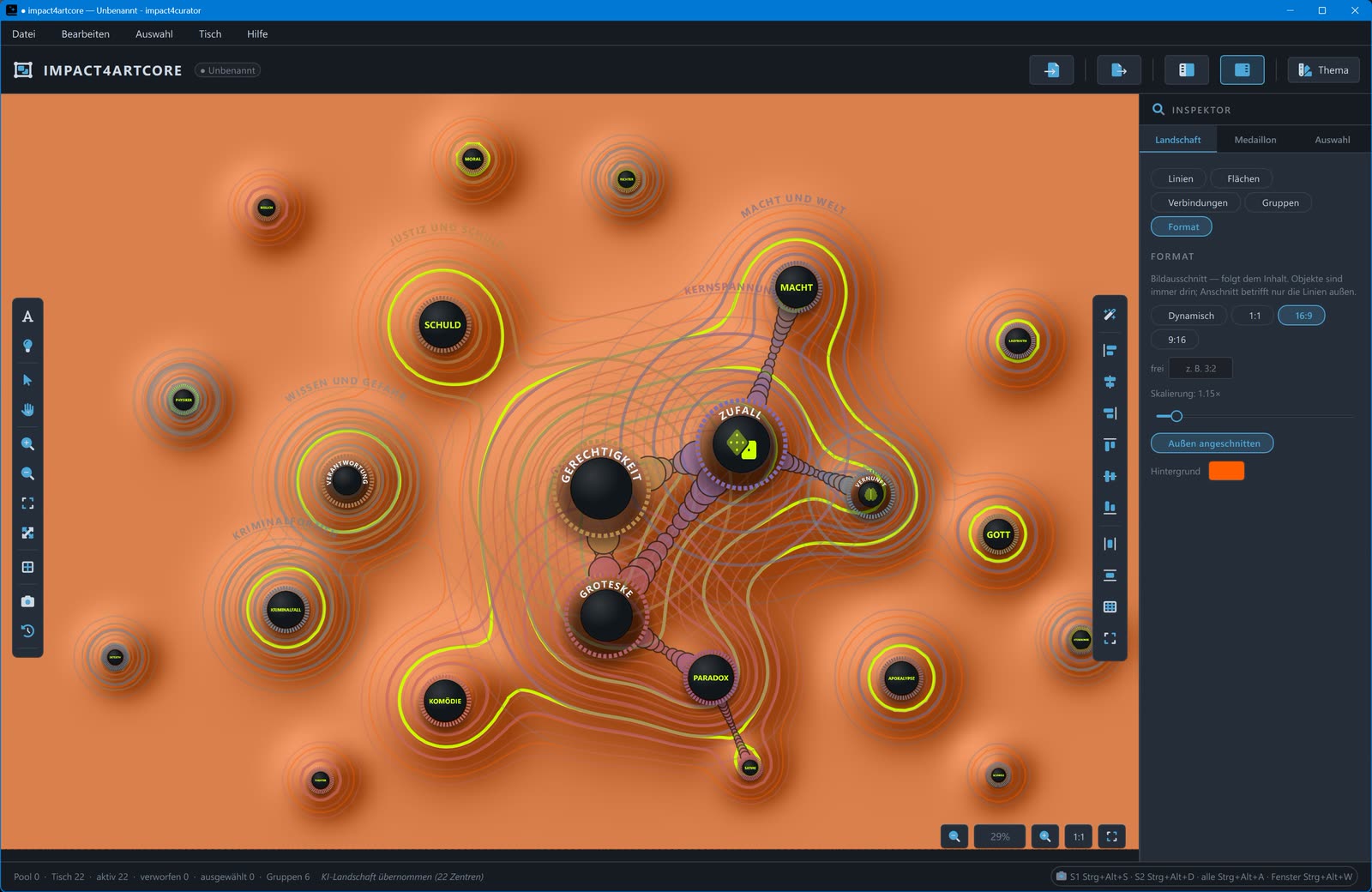
WHAT THE COMBINATION MEANS IN PRACTICE
AI coding accelerates development. Experience gives it direction.
WHAT THE COMBINATION MEANS IN PRACTICE
AI coding accelerates development. Experience gives it direction.
- Experience provides
understanding of the problem, prioritisation, architecture, reduction, technical judgement, product thinking, quality control and risk assessment.
- AI provides
speed, variants, accelerated implementation, technical research, early prototyping and considerably shorter iteration cycles.
- What matters is the combination
Speed alone does not produce a good product. At first it only increases the number of technically possible routes. Experience helps to judge these possibilities, to avoid unnecessary complexity and to concentrate development time on the questions that create the greatest product value.
AI coding accelerates development. Experience gives it direction.
PRODUCT DEVELOPMENT BY THE WEEK
FOCUSED DEVELOPMENT TIME. MOVING PRIORITIES. DECIDED WEEK BY WEEK.
What is booked is development time. Not a scope of features defined in advance, and not a particular contractual result.
PRODUCT DEVELOPMENT BY THE WEEK
FOCUSED DEVELOPMENT TIME. MOVING PRIORITIES. DECIDED WEEK BY WEEK.
What is booked is development time. Not a scope of features defined in advance, and not a particular contractual result.
The week model follows from this logic. The collaboration does not begin with an attempt to fix a long-term scope of features completely. It begins with a concrete product idea or technical question and a clearly bounded development period.
- Before the development week
We clarify which question promises the greatest value, in insight or in product terms, given the current state. What matters is not the longest feature list, but the question whose technical clarification improves the next entrepreneurial decision.
That may be a coherent vertical slice of an application, the core of a new software architecture, a demanding operating concept, a simulation, a visual working environment, or a first complete product core.
- During the development week
Development is focused. New insights can change the priorities. If an approach turns out to be weak, or a better direction becomes visible, we can respond immediately.
This flexibility is not a lack of planning. It is a deliberate consequence of the fact that relevant product information can only arise during real development.
- At the end of the development week
The state of development reached is there to be seen. On that basis it is decided whether to develop further, go deeper, change course or stop.
What is booked is development time. Not a scope of features defined in advance, and not a particular contractual result.
ONE WEEK · 4,900 € NET
Every further week is agreed separately. There is no automatic continuation.
WHAT A WEEK OF DEVELOPMENT CAN ACHIEVE
The scope is not standardised. The standard is: as much solid product reality as possible in as short a development time as possible.
WHAT A WEEK OF DEVELOPMENT CAN ACHIEVE
The scope is not standardised. The standard is: as much solid product reality as possible in as short a development time as possible.
A development week is not a unit of measurement for a fixed number of features. Software products differ too greatly in complexity, starting position and technical dependencies for that.
With suitable tasks, however, a coherent application system can emerge within short development cycles: with a real user interface, domain core logic, a data model, visualisation and a solid technical structure.
With complex desktop, real-time or visualisation systems, a week can produce a vertical slice that does not contain every later feature, but holds enough real architecture and functionality to make central product decisions.
Where the technical foundations are already well understood, the scope can reach considerably further.
Where there are research, integration or performance risks, by contrast, clarifying a single critical technical problem can hold the greatest economic value.
The scope is not standardised. The standard is: as much solid product reality as possible in as short a development time as possible.
WHAT THE CLIENT RECEIVES
SOURCE CODE. CONTINUITY. CONFIDENTIALITY.
You buy development time and receive the project state that comes out of it.
WHAT THE CLIENT RECEIVES
SOURCE CODE. CONTINUITY. CONFIDENTIALITY.
You buy development time and receive the project state that comes out of it.
The collaboration is designed for technical independence.
After payment in full, the client receives the project-related source code of the state of development produced, together with the project files relevant to further work, insofar as these are part of the development and can be transferred in law.
The state of development is intended to be continued by the client themselves or by third parties.
Confidential business and technical information is treated as confidential.
There is no strategic tie to a proprietary development platform belonging to CUBE4DEV.
You buy development time and receive the project state that comes out of it.
TECHNICAL APPROACH
As simple as possible · Technology follows the task · Early visibility · Architecture where it creates value · AI as a tool
TECHNICAL APPROACH
As simple as possible · Technology follows the task · Early visibility · Architecture where it creates value · AI as a tool
- As simple as possible
Complexity is not a mark of quality. A good system solves the task with as little unnecessary technical weight as possible.
- Technology follows the task
Not every task needs the same language, platform or architecture. The technical form is chosen from the product and its state of development.
- Early visibility
The sooner a system can really be used and judged, the sooner solid knowledge arises.
- Architecture where it creates value
An early product core may be lightweight. A growing product needs structure. The two must not be confused.
- AI as a tool
AI is used consistently in development. It does not, however, replace professional responsibility. Results are checked, placed in context, changed and integrated.
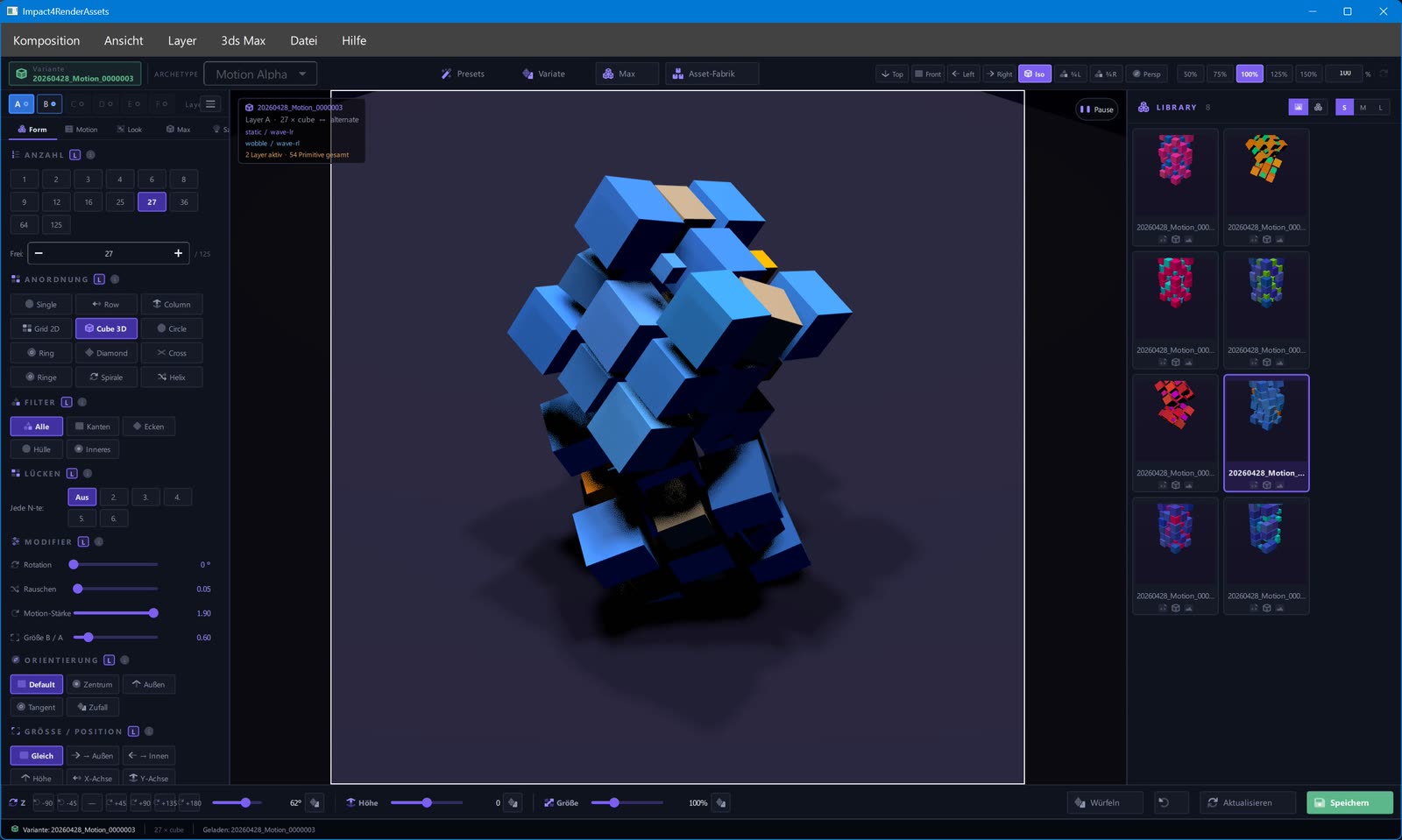
TECHNICAL SUBSTANCE
FROM DESKTOP SOFTWARE TO COMPLEX VISUAL AND INTERACTIVE SYSTEMS
Technology is a means. The task determines the technical form.
TECHNICAL SUBSTANCE
FROM DESKTOP SOFTWARE TO COMPLEX VISUAL AND INTERACTIVE SYSTEMS
Technology is a means. The task determines the technical form.
The technical work ranges from standalone desktop applications and software products to complex visual and interactive systems.
This includes editors, real-time systems, 2D and 3D visualisation, simulation, generative systems, computer vision, automation and AI integration.
Depending on the task, the tools used include C++, Qt, .NET, TypeScript and web technologies.
This breadth is not a menu of services. It is what makes it possible to treat different product ideas in a technically appropriate way.
A specialised desktop application follows different rules from a web system. A real-time visualisation calls for different technical decisions from a data-driven business application. An early product core may be lightweight, while a growing product needs a solid architecture.
Technology is a means. The task determines the technical form.
ART
SELECTION · REDUCTION · JUDGEMENT · A DIRECTION OF ONE'S OWN
Art is therefore not a decorative addition to Unternehmer Avantgarde. It is a second professional perspective on selection, form and decision.
ART
SELECTION · REDUCTION · JUDGEMENT · A DIRECTION OF ONE'S OWN
Art is therefore not a decorative addition to Unternehmer Avantgarde. It is a second professional perspective on selection, form and decision.
Alongside product and software development I work as a professional artist with digital light art, painting and spatial works.
Product development and art are different disciplines. There is, however, one relevant shared competence.
Artistic work demands decisions in situations where the result cannot be fully specified in advance. Variants arise, are judged, discarded, reduced and developed further. Quality does not come from the number of possibilities, but from selection.
That capacity is also gaining importance in technical product development. The larger the solution space that AI can generate, the more important the qualitative distinction becomes between technically possible and genuinely viable solutions.
Art is therefore not a decorative addition to Unternehmer Avantgarde. It is a second professional perspective on selection, form and decision.
FOR COMPANIES WITH THEIR OWN PRODUCT IDEAS AND TECHNICAL AMBITION
The approach is not aimed at implementing existing IT tasks as cheaply as possible. It is aimed at product ideas where technical development can make new entrepreneurial options visible.
FOR COMPANIES WITH THEIR OWN PRODUCT IDEAS AND TECHNICAL AMBITION
The approach is not aimed at implementing existing IT tasks as cheaply as possible. It is aimed at product ideas where technical development can make new entrepreneurial options visible.
The approach is particularly suited to companies in which substantial product ideas exist whose potential has not yet been sufficiently clarified.
That may be a new standalone application, a digital product, a specialised domain system, a simulation, a visualisation environment, a complex interactive tool, or a significant software extension to an existing product.
The model makes particular sense where a real technical state of development promises more insight than further abstract planning, and where the product idea is still flexible enough to respond to new findings.
It is less suitable where a fully specified scope of features is to be bought at a fixed contractual price, where a large development team is needed, or where the aim is merely to add development resources to an existing organisation.
The approach is not aimed at implementing existing IT tasks as cheaply as possible. It is aimed at product ideas where technical development can make new entrepreneurial options visible.
WHICH IDEA SHOULD WE TRY FIRST?
THE FIRST STEP NEED NOT DEFINE THE WHOLE PRODUCT.
The first step does not have to determine the whole product. It has to make the next decision better.
WHICH IDEA SHOULD WE TRY FIRST?
THE FIRST STEP NEED NOT DEFINE THE WHOLE PRODUCT.
The first step does not have to determine the whole product. It has to make the next decision better.
Not every relevant product idea needs a large project straight away.
Often a precise question is enough to begin with: which product idea should be brought to a real technical level before a larger investment is decided? Which application so far exists only as a concept? Which technical possibility is interesting enough not to be discussed in theory any longer?
A development week can be the beginning of a larger product. It can equally provide the basis for deliberately not pursuing an idea, or for developing it in another direction.
The first step does not have to determine the whole product. It has to make the next decision better.
ONE WEEK · 4,900 € NET